
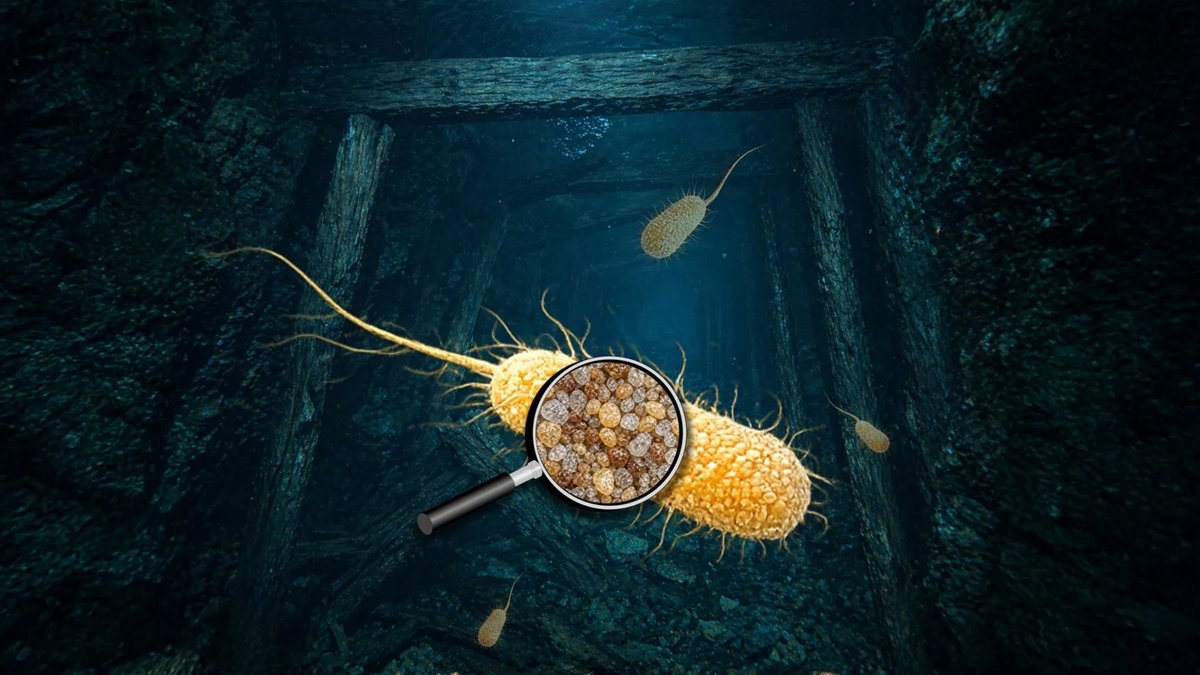
Researchers have made a significant discovery that could contribute to the cleanup of environments contaminated with uranium. Uranium, a radioactive heavy metal, is typically locked inside minerals in soil, but mining and other environmental processes can change it into forms that dissolve in water, allowing it to spread and create problems due to its toxicity. A team of scientists from the Helmholtz-Zentrum Dresden-Rossendorf, working with Wismut GmbH and the University of Granada, has found that bacteria can transform uranium dissolved in water into a stable chemical compound when glycerol is available as a food source.
The findings, published in Nature Communications, could have important implications for the remediation of uranium-contaminated sites. Bacteria found in soil and water are essential parts of natural ecosystems, and some species are capable of processing substances that can be harmful to humans and other organisms. The discovery that certain bacteria can metabolically utilize uranium, which is toxic to humans, raises hopes that these microorganisms could be used to help clean up environments contaminated with this radioactive heavy metal. The research team, led by Dr. Evelyn Krawczyk-Bärsch, scientist in the Terrestrial Microbiology research group, has made a significant step forward in understanding how bacteria interact with uranium.
On This Page
- What is Uranium and Why is it Toxic?
- How Uranium Becomes Mobile in the Environment
- The Role of Bacteria in Processing Uranium
- How Bacteria Transform Uranium into a Stable Compound
- Uranium Accumulation in Bacterial Cell Walls
- Comparison of Uranium Remediation Methods
- The Science Behind Bacterial Uranium Processing
- History of Uranium Research and Remediation Efforts
- Practical Applications of Bacterial Uranium Remediation
- Future Outlook for Bacterial Uranium Remediation
What is Uranium and Why is it Toxic?
Uranium is a radioactive heavy metal that can become mobile and spread through the environment, posing a significant threat to human health and the environment. The toxicity of uranium affects not only humans but also other organisms, causing a range of health problems. Uranium can enter the body through ingestion, inhalation, or skin contact, and once inside, it can cause damage to the kidneys, liver, and other organs. The radioactive properties of uranium also make it a potent carcinogen, increasing the risk of cancer. The toxicity of uranium is a major concern, and understanding its properties and behavior is essential for developing effective strategies for its remediation.
Related: Ancient Engravings Show Sophisticated Human Minds
The radioactive properties of uranium are due to its unstable isotopes, which decay over time, releasing radiation. This radiation can cause damage to living organisms, and prolonged exposure can lead to serious health problems. The toxicity of uranium is also influenced by its chemical properties, which allow it to react with other elements and form compounds that can be highly toxic. The mobility of uranium in the environment is a significant concern, as it can spread through water, soil, and air, contaminating large areas and posing a risk to human health and the environment. For more information on the risks associated with uranium, visit the official website of the United States Environmental Protection Agency.
How Uranium Becomes Mobile in the Environment
Mining and environmental processes can change uranium into forms that dissolve in water, allowing it to become mobile and spread through the environment. Dissolved uranium in water can spread and create problems due to its toxicity, contaminating large areas and posing a risk to human health and the environment. Uranium mobility is a significant environmental concern, as it can contaminate water sources, soil, and air, making it essential to understand the processes that control its movement. The transformation of uranium into mobile forms can occur through a range of processes, including oxidation, reduction, and complexation reactions, which can be influenced by factors such as pH, temperature, and the presence of other elements.
The Role of Bacteria in Processing Uranium
Bacteria can metabolize uranium, a process that has significant implications for cleaning up contaminated environments. Glycerol, a basic component of plant and animal fats, serves as a food source for bacteria to process uranium. When bacteria have access to glycerol, they can transform uranium into a stable compound, reducing the amount of uranium dissolved in water. This process reduces the toxic effects of uranium, which can spread through the environment and create problems for humans and other organisms. Researchers at the Helmholtz-Dresden-Rossendorf have shown that bacteria can utilize uranium dissolved in water for their metabolism, and this process can lead to the creation of a stable chemical compound. The bacteria’s ability to transform uranium into a stable compound is a significant discovery, as it could contribute to future research into using bacteria to help clean up environments contaminated with uranium.
Krawczyk-Bärsch notes that the bacteria’s ability to metabolize uranium is an important finding, as it could provide a new approach to cleaning up contaminated environments. The use of glycerol as a food source for bacteria to process uranium is a key factor in this process, as it allows the bacteria to transform the uranium into a stable compound. This process can help to reduce the amount of uranium dissolved in water, making it a potentially useful tool for cleaning up contaminated environments. The findings of this research have been published in Nature Communications and could contribute to future research into using bacteria to help clean up environments contaminated with uranium. The process by which bacteria transform uranium into a stable compound is complex, but it has significant implications for the cleanup of contaminated environments.
How Bacteria Transform Uranium into a Stable Compound
The transformation of uranium into a stable compound by bacteria is a complex process that involves the use of glycerol as a food source. When bacteria have access to glycerol, they can metabolize uranium, leading to the creation of a stable chemical compound. This process can help to clean up contaminated environments, as it reduces the amount of uranium dissolved in water. The bacteria use glycerol to metabolize uranium, and this process leads to the transformation of uranium into a stable compound. The uranium enters a chemical state that had previously been considered only temporary, and this process can help to mitigate the toxic effects of uranium. The researchers at the Helmholtz-Dresden-Rossendorf, in collaboration with Wismut GmbH and scientists from the University of Granada, have shown that this process can be an effective way to clean up contaminated environments.
Related: Humans and dogs have evolved together for 15,000 years
Uranium Accumulation in Bacterial Cell Walls
Researchers at the Helmholtz-Dresden-Rossendorf have discovered that bacteria can incorporate uranium into their cell walls. This process is a natural one, where the bacteria utilize the uranium as part of their metabolic activities. The cell walls of these microorganisms can store uranium in a stable form, which is a significant finding in the context of uranium remediation. This natural process of uranium accumulation in bacterial cell walls has implications for the development of novel methods for cleaning up environments contaminated with uranium. The bacteria’s ability to transform uranium into a stable chemical compound is a key step in understanding how to harness this process for environmental remediation. Newman-Portela’s work has shown that the presence of glycerol as a food source is essential for this process to occur. By understanding how bacteria interact with uranium, scientists can explore new avenues for uranium remediation.
Comparison of Uranium Remediation Methods
Various methods are available for remediating uranium-contaminated environments, each with its own set of advantages and limitations. Bacterial remediation, which utilizes microorganisms to break down or transform uranium, is a promising approach that has gained significant attention in recent years. To evaluate the effectiveness of bacterial remediation, it is essential to compare it with other methods, such as chemical precipitation and phytoremediation. The following table summarizes the key aspects of different uranium remediation methods.
| Method | Effectiveness | Cost | Feasibility |
|---|---|---|---|
| Bacterial Remediation | High | Low-Moderate | Moderate-High |
| Chemical Precipitation | Moderate | Moderate-High | High |
| Phytoremediation | Low-Moderate | Low | Low-Moderate |
| Electrochemical Remediation | High | High | Low-Moderate |
The comparison of these methods highlights the advantages and limitations of each approach. Bacterial remediation, with its high effectiveness and relatively low cost, is a promising method for uranium remediation. The feasibility of bacterial remediation is moderate to high, depending on the specific site conditions and the presence of suitable microorganisms. Further research is needed to fully explore the potential of bacterial remediation for uranium cleanup.
The Science Behind Bacterial Uranium Processing
Advanced microscopy and spectroscopy techniques have enabled scientists to investigate the intricacies of uranium compounds and understand how bacteria process them. By analyzing the chemical composition of uranium compounds, researchers can determine the most effective methods for bacterial uranium processing. Krawczyk-Bärsch’s investigations have shown that bacteria can utilize uranium dissolved in water for their metabolism when glycerol is available as a food source. The bacterial metabolism plays a key role in this process, as it allows the bacteria to break down the uranium compounds and render them stable.
The investigation of uranium compounds is a complex process that requires a deep understanding of the chemical properties of uranium. Newman-Portela’s work has focused on the chemical forms created as bacteria process uranium, and the team’s findings have shed new light on the potential for bacterial remediation. The team’s discoveries have significant implications for the development of new methods for cleaning up contaminated environments.
Related: How Bioengineered Gum Cuts HPV and Cancer Risk by Up to 93%
History of Uranium Research and Remediation Efforts
Uranium research has a long and varied history, with key milestones marking significant advancements in our understanding of this radioactive heavy metal. The development of remediation methods has been an ongoing process, with scientists continually seeking new and more effective ways to clean up contaminated environments. The evolution of bacterial remediation techniques has been particularly notable, with researchers like those at the Helmholtz-Dresden-Rossendorf making significant contributions to the field. A chronological look at the major milestones in uranium research and remediation efforts reveals a steady progress towards more effective and sustainable solutions.
- 1950s: The first studies on uranium toxicity and its effects on the environment were conducted, laying the groundwork for future research into remediation methods.
- 1970s: The development of advanced spectroscopy techniques enabled scientists to better understand the chemical properties of uranium compounds.
- 1990s: Researchers began exploring the potential for bacterial remediation, with initial studies focusing on the use of bacteria to break down uranium compounds.
- 2000s: The discovery of bacteria that could metabolize uranium led to a surge in research into bacterial remediation techniques, with scientists like Krawczyk-Bärsch making significant contributions to the field.
- 2010s: The development of new methods for cleaning up contaminated environments, including the use of glycerol as a food source for bacteria, marked a major milestone in the evolution of bacterial remediation techniques. For more information on the latest developments in uranium research, visit the Environmental Protection Agency website.
The history of uranium research and remediation efforts is complex, with many different scientists and organizations contributing to our understanding of this radioactive heavy metal. As research continues to advance, it is likely that new and more effective methods for cleaning up contaminated environments will be developed, providing a safer and more sustainable future for generations to come. Newman-Portela’s work has been instrumental in advancing our understanding of bacterial remediation techniques, and his discoveries have significant implications for the development of new methods for cleaning up contaminated environments.
Practical Applications of Bacterial Uranium Remediation
Researchers like Krawczyk-Bärsch have been investigating the potential of bacterial uranium remediation to clean up contaminated environments. This process involves using bacteria to transform dissolved uranium into a stable chemical compound, reducing the risk of environmental contamination. One potential application of this technology is in the remediation of uranium mines, where bacteria can be used to reduce the amount of uranium dissolved in mine water. For example, the team collected mine water from a flooded uranium mine in the Ore Mountains and added a controlled amount of glycerol to samples of the water, demonstrating the effectiveness of this approach.
Future Outlook for Bacterial Uranium Remediation
The discovery that bacteria can transform uranium dissolved in water into a stable chemical compound has significant implications for the future of environmental remediation. Newman-Portela’s work has shown that this process can be effective in reducing the amount of uranium dissolved in water, and further research is needed to explore the potential for large-scale applications. The potential impact of this technology on environmental sustainability is substantial, as it could provide a cost-effective and efficient method for cleaning up contaminated environments. According to the Helmholtz-Dresden-Rossendorf, further research is needed to fully understand the mechanisms underlying bacterial uranium remediation, but the initial results are promising. For more information on the latest research and developments in this field, visit the Helmholtz-Dresden-Rossendorf website. The team’s findings, published in Nature Communications, highlight the importance of continued research into the potential applications of bacterial uranium remediation, and the potential for this technology to make a significant contribution to environmental sustainability in the future, with bacteria playing a key role in transforming uranium into a stable compound.
Quick Answers
Can bacteria really lock away toxic uranium forever?
Certain bacteria have the ability to reduce uranium, making it less soluble and less toxic. This process, known as bioremediation, can potentially immobilize uranium in the environment. However, the long-term effectiveness of this process is still being researched.
How do bacteria interact with uranium in the environment?
Bacteria can interact with uranium through various mechanisms, including reduction, adsorption, and precipitation. These interactions can lead to the formation of less toxic uranium compounds, which can be more stable in the environment. The specific mechanisms depend on the type of bacteria and the environmental conditions.
What types of bacteria are capable of reducing uranium?
Several types of bacteria, including Geobacter and Shewanella, have been shown to reduce uranium. These bacteria have enzymes that can transfer electrons to uranium, reducing its oxidation state and making it less soluble. Other bacteria, such as Pseudomonas, can also contribute to uranium reduction through indirect mechanisms.
Can bacteria completely eliminate uranium from the environment?
While bacteria can reduce uranium and make it less toxic, they may not be able to completely eliminate it from the environment. Uranium is a naturally occurring element, and its complete removal may not be possible. However, bacterial reduction can help to immobilize uranium and reduce its potential for harming living organisms.


Leave a Reply