
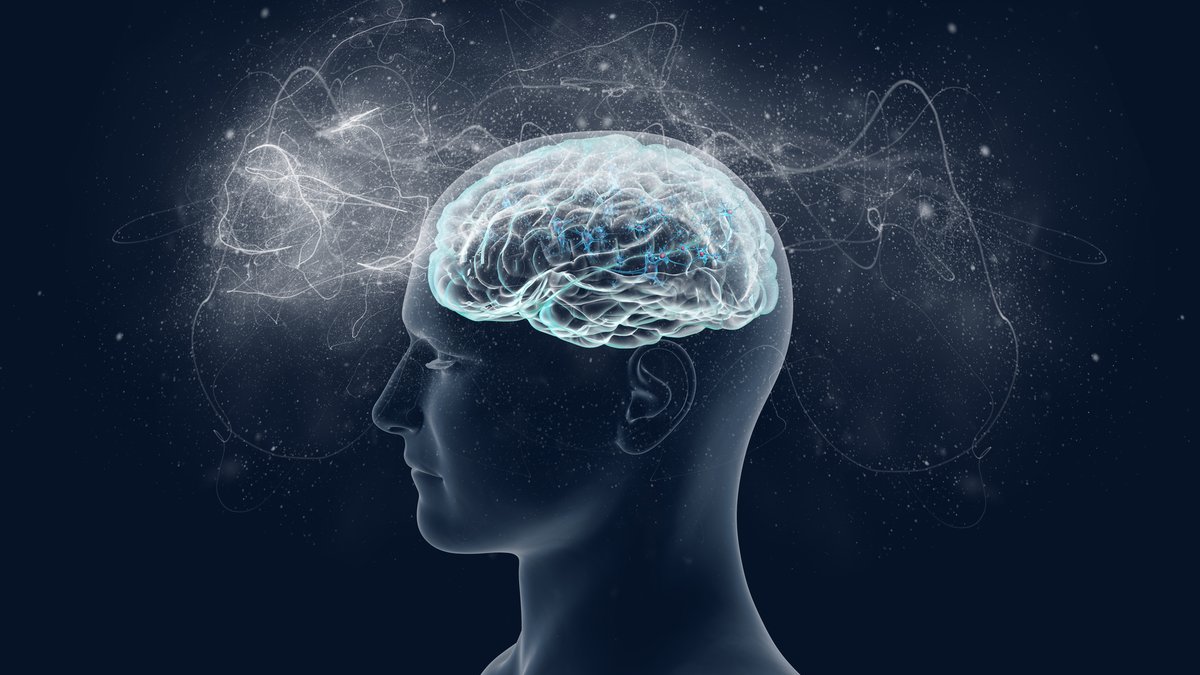
Michael Pollan’s A World Appears rejects the idea that consciousness can be reduced to a problem waiting for a solution. The book presents it instead as an unexplored environment where neuroscience, philosophy, and personal experience intersect without yielding definitive answers. Its power comes from avoiding oversimplification, merging thorough investigation with the complexity of subjective experience.
The hard problem of consciousness—how brain activity generates subjective awareness—forms the book’s central focus. Pollan does not attempt to resolve it but instead charts its boundaries, relying on researchers who examine the divide between observable neural functions and the first-person reality of existence. He maintains a cautious stance toward overconfident theories while remaining open to ideas that defy traditional scientific frameworks, including findings from psychedelic studies.
Psychedelics serve as one perspective through which altered states are analyzed, but Pollan treats them as a single approach among many. While these substances can break rigid thought patterns, their practical applications in clinical settings remain constrained. The text acknowledges that for some individuals, altered states may cause instability rather than revelation, reflecting broader discussions in psychiatry about the nature of identity and perception.
Pollan’s discussion of the constructed self stands out as particularly insightful. He dismantles the notion of a stable, unified identity, instead depicting selfhood as a fluid process influenced by circumstances and encounters. This viewpoint aligns with clinical observations where disturbances in self-perception, such as hallucinations, depersonalization, or dissociation, play a key role in mental health issues. The book argues that comprehending consciousness demands an examination of both its vulnerability and its adaptability.
Read Also: Major cancer conference returns to Dublin to showcase latest treatment
Advances in brain imaging and cognitive science have accelerated, yet the gap between neural activity and lived experience remains unresolved. Even detailed scans of active brain regions fail to capture the essence of sensory perception, what it means to see, hear, or feel. Pollan identifies this as a fundamental obstacle, not merely a technical limitation. The mismatch between objective measurements and subjective reality continues to pose challenges in both research and clinical work.
For those new to the topic, the book’s most valuable contribution may be its clarity. Pollan steers clear of technical language, blending scientific research with personal accounts from psychedelic users, meditators, and philosophers. The result is an introductory guide rather than a specialized text, one that encourages exploration without requiring prior knowledge. This accessibility makes A World Appears valuable for clinicians working to reconcile measurable symptoms with patient descriptions, as well as for readers seeking a clearer understanding of consciousness itself.
One recurring theme in the text is the role of technology in studying consciousness. Pollan examines how tools like fMRI scans and psychedelic compounds provide partial insights but also introduce new questions. For example, while brain imaging can track activity during meditation, it cannot fully capture the meditative state itself. This limitation shows the book’s central argument: that consciousness resists complete explanation through any single method.


Leave a Reply