
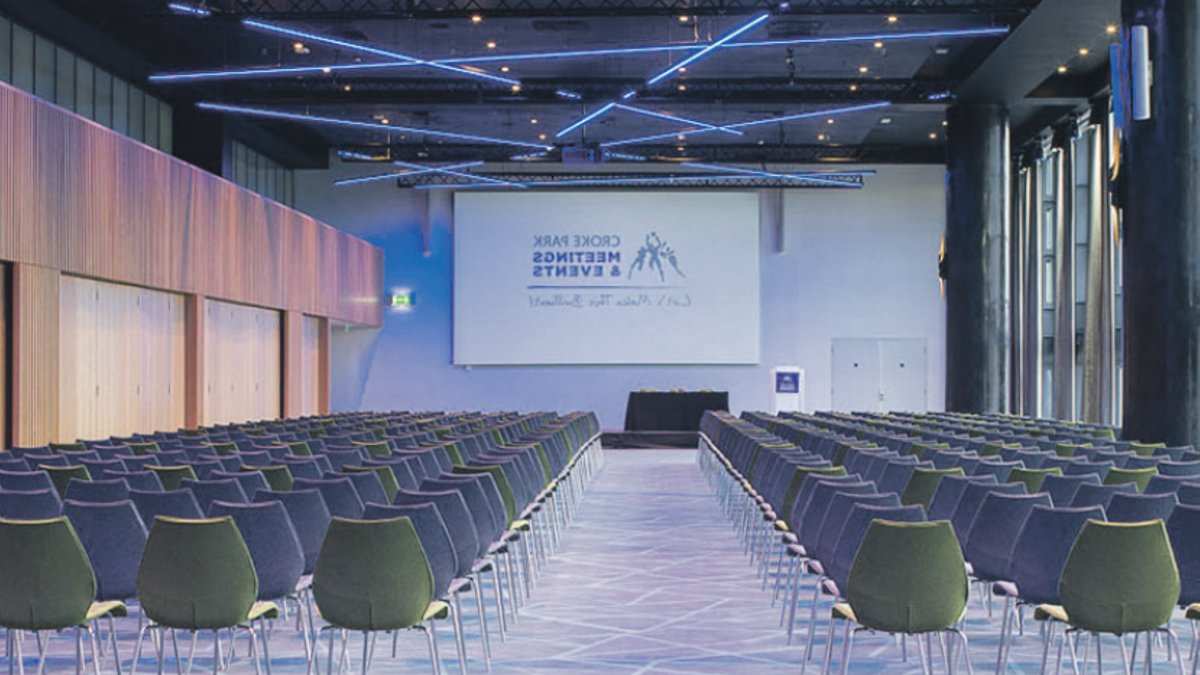
Gathering Around Cancer 2026 will return to Croke Park in Dublin next November, bringing together researchers, clinicians, and patient advocates to discuss the latest developments in cancer care. The two-day event, set for 19–20 November, will explore clinical updates, precision medicine, and supportive care—areas the organizers say are transforming cancer treatment approaches.
The conference is led by a group of prominent oncologists and researchers, including Prof John McCaffrey from Mater Misericordiae University Hospital, Prof David Gallagher of St James’s Hospital, Dr Megan Greally of Beaumont Hospital, and Dr Roisin O’Cearbhaill from Memorial Sloan Kettering Cancer Centre (MSKCC). Their objective is to connect research with practical application, ensuring clinical advancements reach patients more efficiently.
Precision medicine will dominate discussions, with sessions examining how genetic testing and targeted therapies are altering treatment approaches. A key talk by Dr Orla Fitzpatrick from MSKCC will focus on precision strategies for hepatobiliary cancers, while Dr Eileen Geoghegan from the Peter MacCallum Cancer Centre will share results from the CAPTURE trial, a phase two study testing a combined therapy for hormone receptor-positive, HER2-negative advanced breast cancer with a PIK3CA mutation.
Gastrointestinal and genitourinary cancers will also be prominent. Prof David Galvin will discuss findings from the Irish Prostate Cancer Outcomes Registry (IPCOR), which monitors long-term results to improve care standards. Meanwhile, Dr Gopa Iyer from MSKCC will outline updated treatments for metastatic urothelial cancer, highlighting recent shifts following new immunotherapy approvals.
Supportive care and patient experience will receive significant attention, reflecting broader recognition that cancer treatment extends beyond medical protocols. Discussions will cover nutrition, physical activity, and psychological support, including Dr Jason Konner’s exploration of psychedelic-assisted therapy in palliative care. The Irish Cancer Society will also address practical challenges like fatigue and treatment-related weight loss.
Rare cancers and early-career research gaps
Early-career researchers will present in two sessions, featuring studies on rare sarcomas, immunotherapy resistance, and prostate cancer. Dr Catherine Weadick from the Princess Margaret Cancer Centre will analyze outcomes in ultra-rare sarcomas, where clinical trial data remains scarce. The session will highlight the need for collaborative research to address treatment gaps in less common cancers.
Related Post: Genes reveal prostate cancer risks and treatment clues
The first day will conclude with a breast cancer update, including discussions on HER2-positive early-stage disease and advances in triple-negative breast cancer (TNBC). The evening will end with a networking event, allowing attendees to engage informally with speakers and colleagues.
Supporting survivors beyond treatment protocols
The second day will begin with sessions on nursing and psychological support, including discussions on sexual health after cancer and digital tools to improve patient-provider communication. Dr Jeanne Carter from MSKCC will examine obstacles in addressing sexual health with survivors—a topic frequently overlooked in standard oncology care.
The final scientific session will review updates across oncology, from CAR-T and BiTE therapies in solid tumors to early detection strategies for lung cancer. Dr Fionnuala Crowley of Mount Sinai Health System will discuss how immune-based approaches could enable earlier interventions, while Dr Emma Woodward of the Manchester Centre for Genomic Medicine will present on hereditary cancer risks in children and young adults.
Genomics and liquid biopsy advancements
The first session, co-chaired by Dr Emily Harrold of St James’s Hospital and Dr Karen Duffy of Letterkenny University Hospital, will spotlight early-career researchers. Four presentations will cover diverse topics, including Dr David McMahon’s discussion on pre-test counseling for genomic analysis using liquid biopsy, a key consideration as testing becomes more widespread. Dr Ciara McNevin from Beaumont Hospital will examine how cancer genetics data is used in Ireland, identifying gaps and opportunities in national registries.
A dedicated session on gastrointestinal and genitourinary cancers will feature Prof James Harding of MSKCC discussing targeted therapies for HER2-positive biliary tract cancers, an area where precision approaches are expanding. Dr Ronan McLaughlin and Prof Danny Cheriyan, both from Beaumont Hospital, will address emerging biomarkers in gastroesophageal cancer and endoscopic techniques for early upper gastrointestinal tumors. Prof Grainne O’Kane will provide an overview of pancreatic and hepatobiliary cancer management, reflecting ongoing challenges in these aggressive diseases.
In urothelial cancer, Dr Gopa Iyer will explore treatment options in the post-EV (enfortumab vedotin) era, where new immunotherapies are reshaping care for metastatic disease.


Leave a Reply