
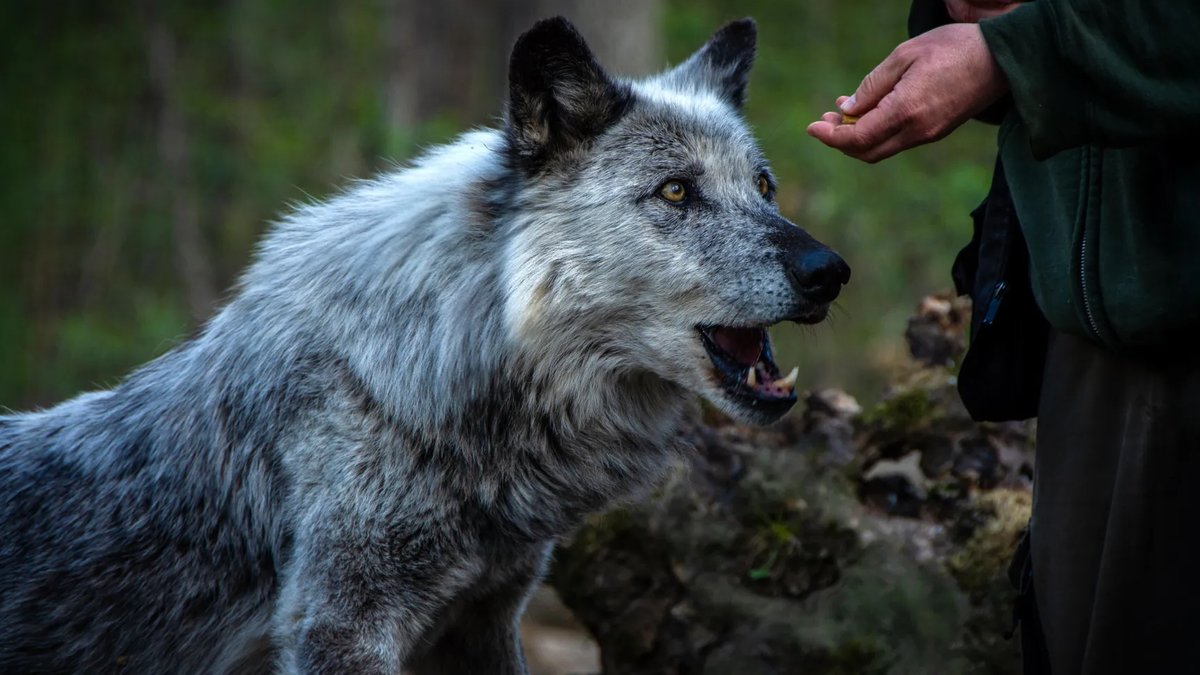
Archaeological evidence shows dogs buried beside humans in graves dating back 14,000 years, alongside their appearance in ancient artwork across every continent. These animals hunted alongside people, guarded homes, and provided companionship for millennia. Over 15,000 years of shared history, humans and dogs have fundamentally altered one another’s biology and behavior.
Cooperation Over Domination
Professor Peter Mitchell argues that early human-wolf interactions were not a simple act of domestication but a complex, gradual process. In his book First Dogs, Mitchell suggests hunter-gatherer communities and wolves entered the relationship as relatively equal participants. As these relationships developed in different places, dogs acquired specialized traits suited to specific environments and human needs.
The connections between dogs and people dependent on wild resources are ancient and profound.
Adapting to the Environment
Dogs changed dramatically as they lived alongside different human societies. Northern sled dogs evolved into compact, heavily coated animals for cold conditions, while hunting dogs near the equator became leaner and better suited to heat. On the Tibetan Plateau, researchers identified genes in dogs that allow them to function in oxygen-poor conditions. These genetic adaptations resemble changes found among human populations living in the same region.
The partnership between people and dogs became especially specialized in the Arctic. Indigenous communities developed cultures centered on dog sledding, and archaeological evidence suggests Arctic dogs developed skeletal characteristics associated with pulling heavy loads. Their vertebrae show distinctive stress patterns, and their limb bones are strong enough to handle repeated strain across frozen terrain. Stable isotope studies of ancient bones reveal that people and dogs often ate similar diets dominated by marine foods in coastal areas.
Elsewhere, dogs followed a very different evolutionary path. In the rainforests of South America and Southeast Asia, dogs living with hunter-gatherer communities became specialized hunting companions capable of moving through thick vegetation. Ethnographic records indicate that Indigenous communities carefully controlled breeding to preserve desirable skills, sometimes even breeding dogs with wild canids to reinforce particular characteristics.
In practice, this means a dog’s appearance and abilities were often dictated by the specific needs of the community that raised it. On the Northwest Coast of North America, some groups bred small dogs with woolly coats for their hair, which was used to make ceremonial blankets. These dogs took on a textile production role rather than hunting or transportation. Cultural roles also encouraged people to favor certain appearances or behaviors that carried particular significance.
Biological Barriers to Spread
Environmental adaptation was not the only force influencing the global spread of dogs. Researchers are examining how diseases transmitted by vectors may have restricted where canine populations could survive. In sub-Saharan Africa, diseases including trypanosomiasis and ehrlichiosis may have created serious obstacles for dogs.
This biological pressure helps explain why dogs, species originally suited to temperate to Arctic regions, reached some tropical areas relatively late. Disease added another dimension to the story of canine evolution, limiting where dogs could successfully live just as much as the environment offered opportunities.
Genetic research shows that many ancient dog populations no longer survive in their original form. During colonial expansion, European breeds spread across much of the world and replaced numerous older lineages. However, genetic traces of those ancient dogs remain, offering clues about their history.
Human stress levels often start high, particularly when people wake up. [1]Cannabis users may experience higher stress in the morning than those who do not use the substance.
Another area of biological intervention involves oral health and cancer prevention. Bioengineered gum technology has been developed to cut HPV and cancer risk by up to 93%. [2]Bioengineered gum offers a promising tool for preventing viral infections in the mouth.


Leave a Reply