
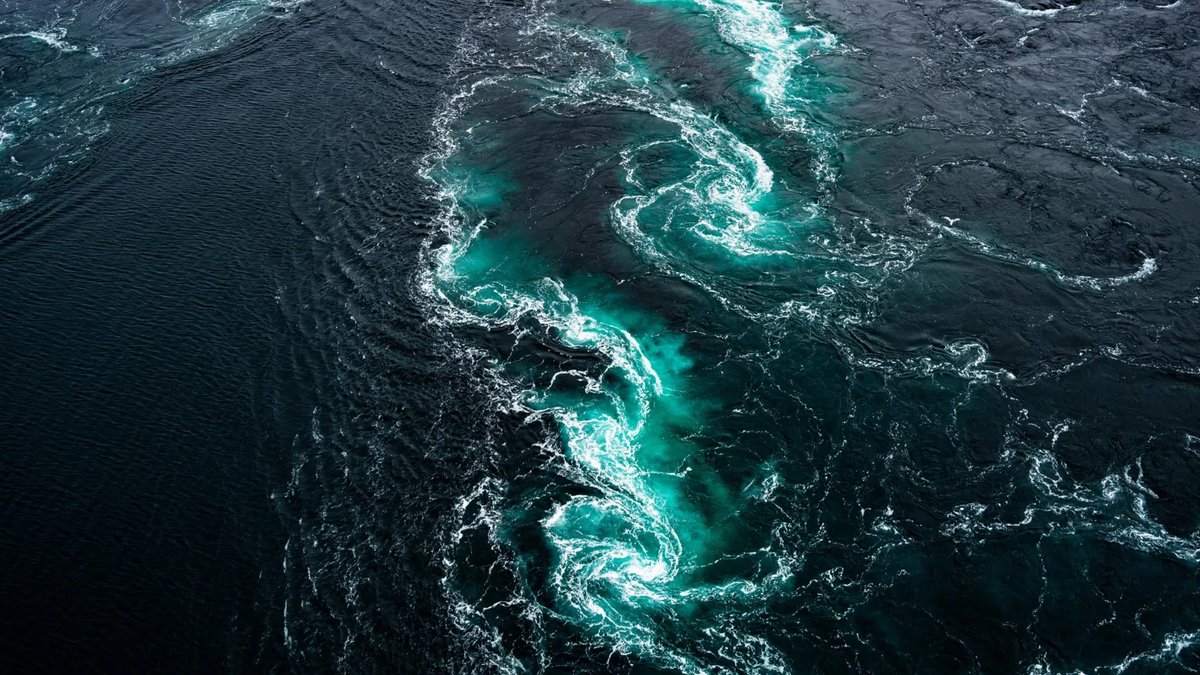
The Atlantic Ocean’s vast heat-distribution system may be more resilient to warming than scientists once believed—but only if the planet heats up slowly.
An ocean current that shapes the climate
The Atlantic Meridional Overturning Circulation, or AMOC, is a network of currents carrying warm water from the tropics toward Europe. By moving heat around the planet, it strongly influences the global climate and helps maintain the relatively mild conditions found in Western Europe. Without this circulation, Western Europe would experience much colder conditions.
For years, scientists have cautioned that the AMOC could weaken or collapse if global temperatures rise too far. Such a shutdown would disrupt rainfall patterns, speed up sea-level rise along the U.S. East Coast, and push parts of Europe into deeper cold.
Temperature alone isn’t the whole story
A study from Utrecht University, published in Nature Climate Change, indicates that the pace of warming is as important as the total increase. Earlier estimates suggested the AMOC’s tipping point would occur at around 4°C of global warming. The Dutch team discovered the circulation could remain stable at much higher temperatures if warming happens gradually.
“Our results show there is not necessarily a fixed temperature beyond which the AMOC inevitably collapses,” said lead author René van Westen. “The stability of the circulation depends on how fast the climate is changing.”
The team ran two climate-model simulations. In both, atmospheric CO₂ levels rose, but at different rates. When CO₂ increased slowly—0.5 parts per million (ppm) per year—the AMOC stayed intact even after global temperatures passed 5°C. When CO₂ rose faster, at 2.5 ppm per year (close to today’s rate), the system collapsed at around 2°C.
The ocean’s slow adjustment
The difference stems from how quickly the ocean can adapt. Under slow warming, deeper water layers adjust to surface changes over time. Under rapid warming, the system becomes overwhelmed, and the circulation weakens.
Related: Black Holes Cause Mysterious Star Explosions
“Under slow warming, the entire ocean, from the surface to its deepest layers, has time to gradually reorganize,” said co-author Henk Dijkstra, a professor of dynamical oceanography. “Under faster warming, the ocean simply can’t keep up.”
Van Westen’s group identified a critical warming rate of 0.3°C per decade. The world is already approaching that pace. He compared it to driving toward a wall: “If you’re driving toward a wall, it makes sense to steer around it. To do that, you need to brake. When it comes to global warming, the world is still pressing extra hard on the accelerator.”
The findings suggest climate strategies focused only on limiting peak temperatures may fall short.
Policy implications: speed matters
Pathways where temperatures temporarily exceed targets before being brought back down could still destabilize the AMOC if warming happens too quickly. “The path taken toward a given temperature may matter alongside the temperature itself,” the study notes. Slower warming allows the ocean time to adjust, lowering the risk of abrupt collapse.
Past estimates of the AMOC’s tipping point have ranged from 1.5°C to 4°C. The Utrecht team’s work helps explain the variation. Different models and scenarios produce different results because they assume different rates of warming. A system appearing stable at 4°C under slow warming might collapse at 2°C if temperatures rise too fast.
That variability doesn’t mean the circulation is safe.
It means the risk depends on more than just the final temperature—it depends on how quickly we reach it. Recent discoveries about brain rhythms show how small changes in timing can have large effects, a principle that may apply to ocean systems as well.


Leave a Reply