
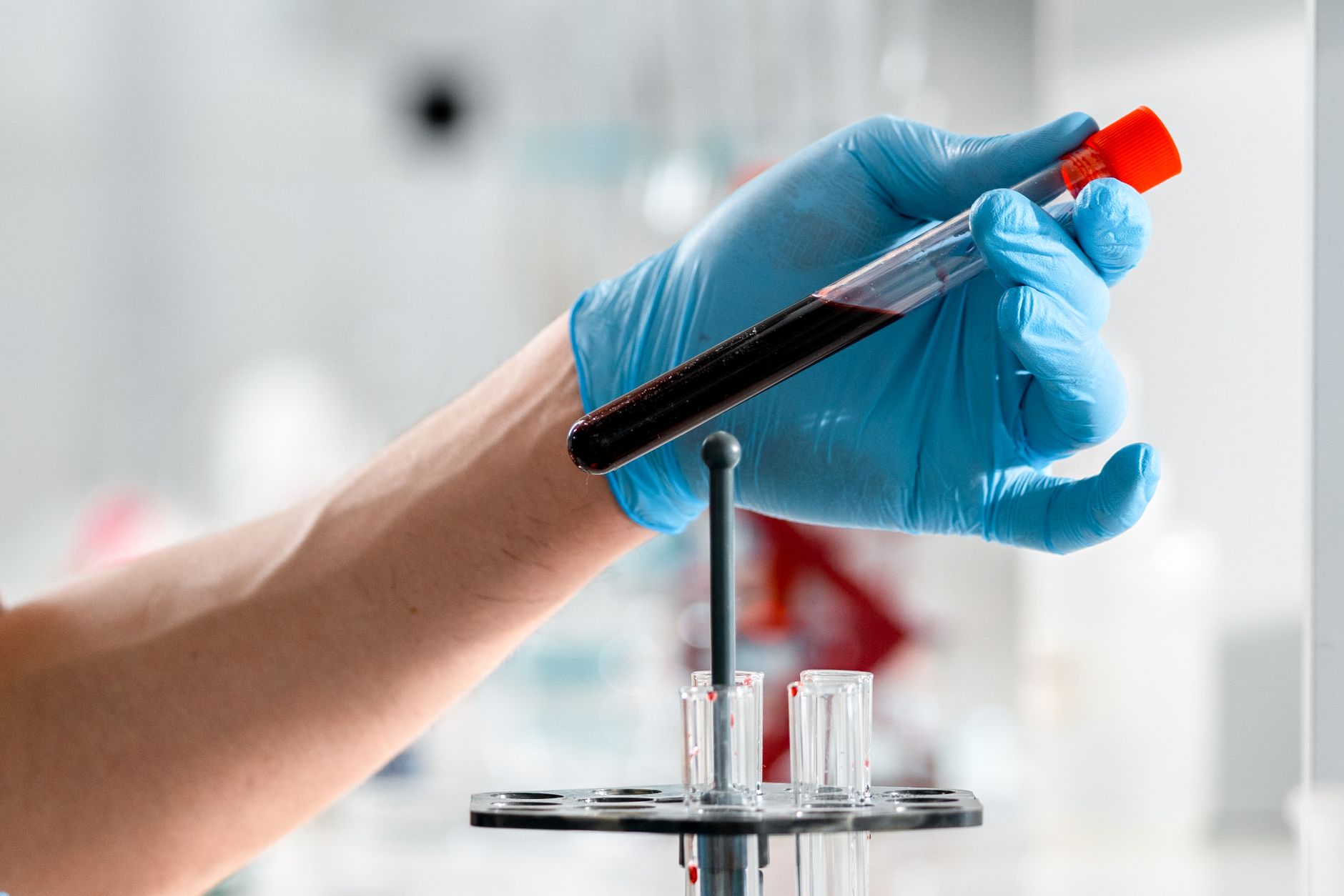
Blood tests using circulating tumor DNA matched or outperformed traditional tissue biopsies in detecting residual disease in triple-negative breast cancer, a U.K. study found. The results point to a less invasive way to predict recurrence in this aggressive form of the disease.
Blood test rivals tissue biopsies for accuracy
The study, published August 13 in JAMA Network, involved 159 patients with triple-negative breast cancer at moderate to high risk of recurrence. A tissue-free ctDNA assay proved highly prognostic for relapse, identifying minimal residual disease as early as tumor biopsy-based tests and sometimes sooner.
Niamh Cunningham, MBBS, of the Ralph Lauren Centre for Breast Cancer Research at the Royal Marsden Hospital, and Nicholas C. Turner, MD, PhD, led the research. Their group collected plasma samples every three months for up to two years after adjuvant therapy, analyzing them with digital polymerase chain reaction.
The assay detected ctDNA in 54 patients. Detection strongly correlated with recurrence risk. Among 42 patients where both the tissue-free assay and dPCR identified ctDNA, the tissue-free method flagged disease earlier in 14 cases. dPCR never detected ctDNA before the tissue-free test did.
Impact on a deadly cancer
Triple-negative breast cancer represents about 15% of all breast cancers but has a much higher risk of recurrence and death. Standard treatments often involve high doses of toxic therapy, yet many patients still relapse. Early detection of minimal residual disease could allow clinicians to adjust treatment before tumors spread.
Tumor biopsies have long served as the gold standard for guiding therapy, providing a molecular blueprint of the cancer. However, they are invasive, sometimes impossible to obtain, and may not capture the full picture of a tumor’s changes over time. ctDNA, released by cancer cells into the bloodstream, offers a real-time snapshot without requiring tissue samples.
Previous research has shown promise in using blood-based markers to track treatment response and detect relapse across multiple cancer types. TNBC has been more challenging due to its molecular diversity, which makes it harder to pin down with traditional methods.
Related: Humans and dogs have evolved together for 15,000 years
Key findings
The study analyzed 1,026 plasma samples from participants. The assay identified ctDNA in 34% of them, with a clear connection to recurrence. In cases where both assays detected ctDNA, the tissue-free version was faster in a third of patients.
The authors noted that ctDNA testing could be particularly useful when archival tissue is unavailable, a frequent issue in clinical practice. They stated that the findings support tissue-free ctDNA detection in monitoring residual disease.
A separate study, PREDICT-DNA, examined ctDNA’s ability to predict pathologic complete response in TNBC. Though it did not meet its primary goal, secondary results indicated potential clinical value. That research used an ultrasensitive assay capable of detecting variants at very low levels.
Limitations remain
ctDNA testing has drawbacks. False negatives can occur, and not all cancers release enough DNA into the bloodstream to be detected. The technology is still improving, with different assays offering varying levels of sensitivity.
Despite these challenges, the U.K. study contributes to evidence that blood-based tests could change how doctors monitor high-risk cancers. For TNBC patients, who often endure harsh treatments with uncertain outcomes, earlier detection of recurrence might lead to more precise interventions.
A simple blood draw may one day offer the same or better insights than invasive biopsies. For now, tissue sampling remains essential, but the new findings suggest a shift toward less burdensome methods could be underway.


Leave a Reply