
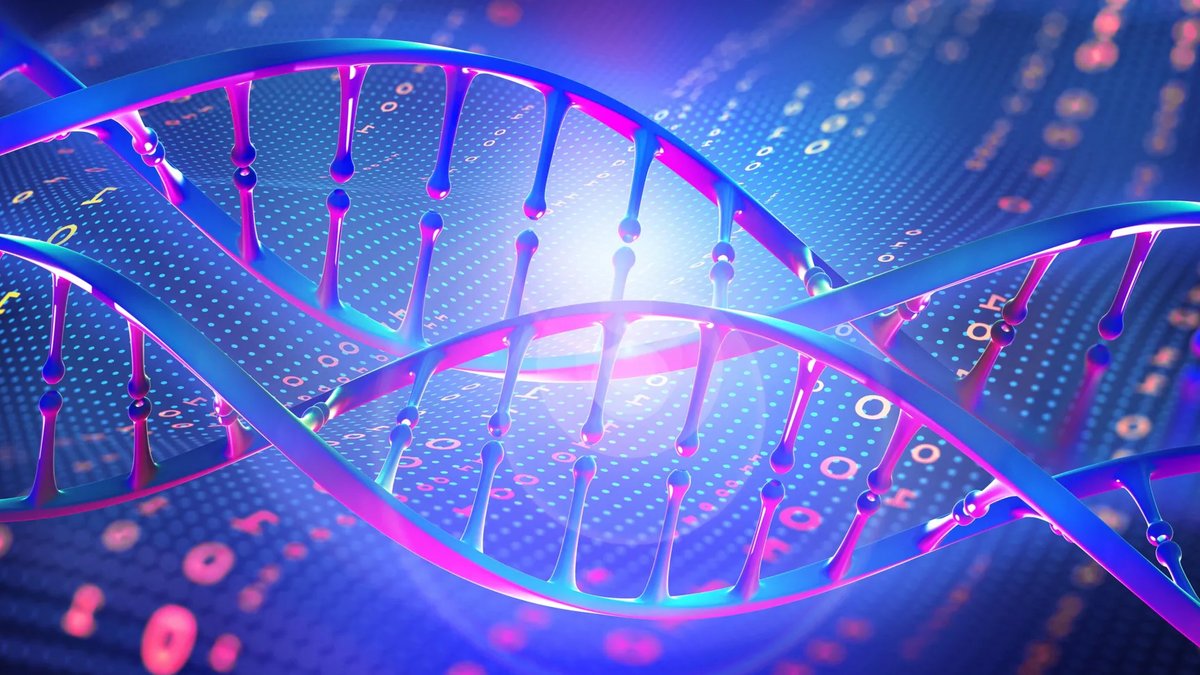
Scientists at Penn State have created a memory device that uses DNA to store data while using 100 times less power than conventional electronics. The innovation combines synthetic DNA with perovskite, a semiconductor already used in solar cells and data storage, to offer a low-energy alternative for future computing systems.
Bridging biology and electronics
DNA’s ability to store vast amounts of information—about 215 million gigabytes per gram—has attracted attention for years. Integrating biological material with electronic systems has posed challenges. The Penn State team solved this by designing synthetic DNA sequences and pairing them with perovskite crystals.
“Biology and electronics operate in different ways,” said Kavya S. Keremane, a postdoctoral researcher in materials science and engineering at Penn State. “Connecting these two fields required a new materials platform that lets them work together without issues.”
The result is a memristor, a memory resistor that retains information even when power is disconnected. Unlike traditional resistors, which lose data without electricity, memristors remember the direction of previous current flow. This behavior resembles how neurons function in the brain, allowing more efficient data processing.
A device built for efficiency
The team’s method relies on two main components: synthetic DNA, chemically designed for specific electronic properties, and perovskite, which delivers strong semiconductor performance. By adding silver nanoparticles to the DNA, researchers enabled it to conduct electricity while keeping its molecular structure orderly.
Natural DNA’s long, tangled strands make it hard to use at small scales. Synthetic DNA, however, can be built in short, rigid sequences, allowing precise placement within thin films. This accuracy is essential for creating stable, high-performance devices.
The silver-doped DNA and perovskite together formed pathways that guided electrical current with little resistance.
Previous attempts to combine biology with electronics often faced stability and scalability problems. The Penn State team avoided these by using synthetic DNA, which can be customized for specific electrical properties without the unpredictability of natural genetic material.
Related: FDA recalls 12 million eye drops nationwide
Lower power, higher capacity
Bed Poudel, a research professor at Penn State, said the device’s low energy use could transform artificial intelligence and neuromorphic computing—systems built to process information like the human brain. These technologies demand large storage and minimal power, areas where traditional electronics struggle.
“Typically, storing more information requires more power,” Poudel said. “Our device uses far less energy while offering greater storage capacity than flash drives.”
The team tested the system by applying small electrical currents and monitoring its response. It consistently remembered the current’s direction, a critical feature for memory storage. The combination of DNA and perovskite worked better than either material alone.
The researchers plan to improve the technology and explore other uses for bio-inspired electronics. Poudel noted that nature often holds solutions to modern computing challenges.
“Nature provides answers—we just need to find and apply them,” he said.
The study, published in Advanced Functional Materials, received support from the U.S. National Science Foundation, the National Institutes of Health, Penn State, and the University of Minnesota. The team has also filed a patent for the technology.
A recent study showed that a cheap heart drug reduces hospital stays sharply, demonstrating how small adjustments in medical treatments can yield significant improvements.


Leave a Reply